

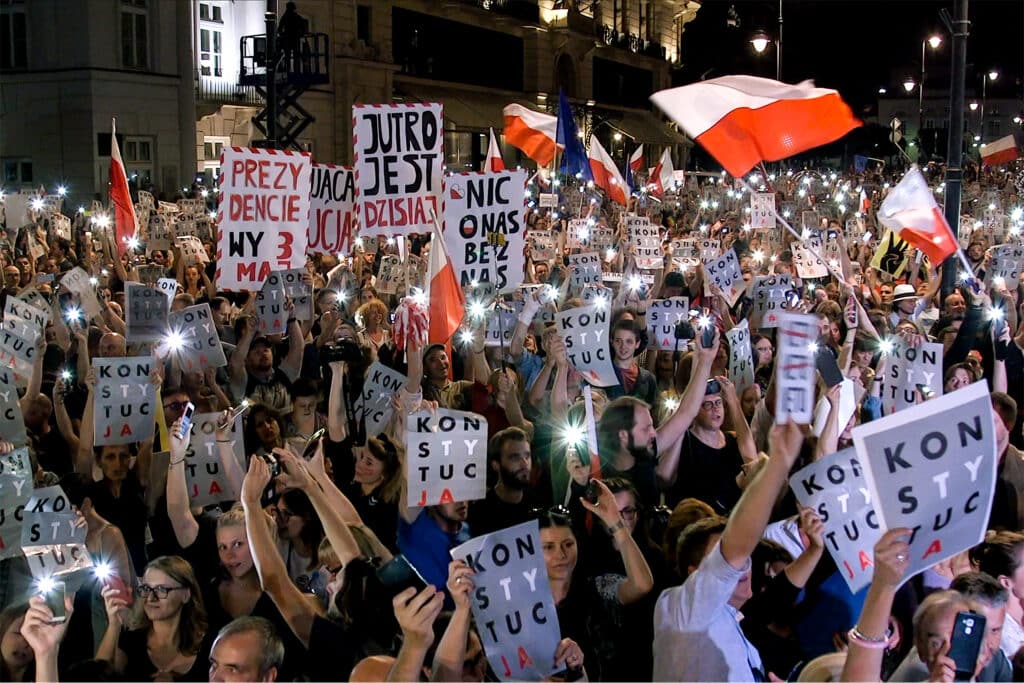
"Free courts,
free elections,
free Poland"
The right-wing conservative government of the PiS party ("Prawo i Sprawiedliwość" / "Law and Justice") fundamentally restructured the Polish justice system between 2015 and 2023.
Gradual changes from 2016 Judicial reforms the working conditions for public prosecutors and judges. From 2018, for example, they had to reckon with forced transfers and suspensions by a newly created disciplinary chamber. The PiS thus de facto abolished the independence of the judiciary in Poland.
Various judges, public prosecutors and lawyers opposed these interventions. From 2017, the reforms of the Polish judiciary led to the Conflict with the European Union and the European Court of Justice and triggered repeated protests from the population.
Focus on commitment to the rule of law
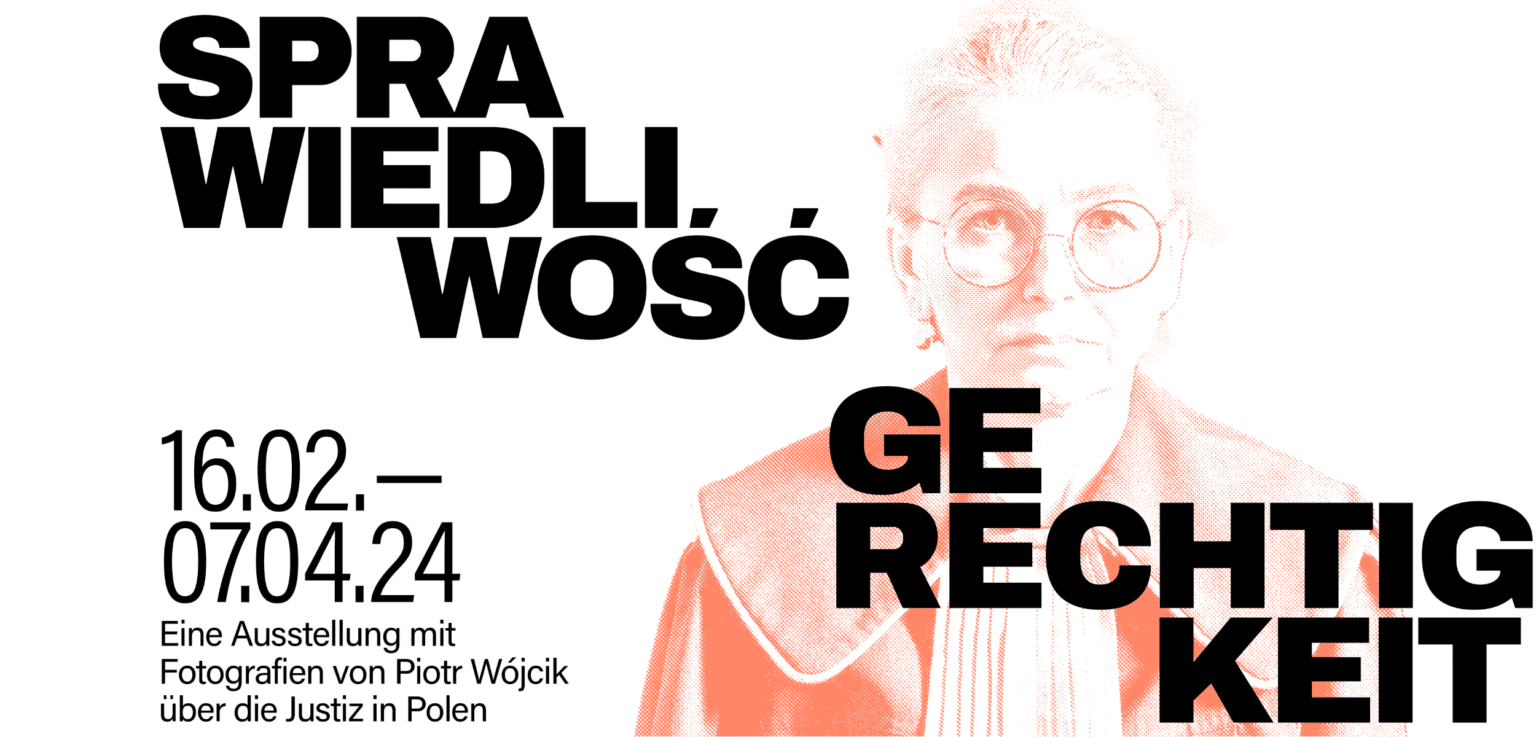
Piotr Wójcik, longtime photojournalist for the Polish daily newspaper Gazeta Wyborcza and university lecturer, took this commitment as the starting point for the photography project Sprawiedliwość: "I then decided to document and present the profiles of these people who had the courage to say 'no' to the destruction of the legal system in Poland." The pictures and interviews with the Polish lawyers were taken by 2020 to 2021. Together with the Fundacja Picture Doc, the Stiftung Forum Recht is showing these for the first time in Germany at its locations in Karlsruhe and Leipzig.
In cooperation with the Fundacja Picture Doc

Judicial reforms (2015-2024)
2015
Five posts at the Constitutional Court will be filled twice, each time by different majorities before and after the parliamentary elections.
The party Law and justice (PiS) receives 37.6 % in the parliamentary elections and replaces the coalition government led by the Citizens' platform (PO).
The Minister of Justice is also appointed Attorney General; he can thus intervene in court proceedings.
2016
The EU Commission issues its first official warning about the controversial Polish judicial reform.
2017
The PiS parliamentary majority is using legislation to gain access to the Appointment of the Supreme Court. In addition, the retirement age will be lowered and a disciplinary chamber established.
The EU is initiating so-called Article 7 proceedings against Poland. This could lead to a Suspension of Polish EU voting rights lead. Further Infringement proceedings follow.
2018
Numerous judges of the Supreme Court will be compulsorily retired.
2019
Poland's Deputy Minister of Justice Łukasz Piebiak resigns after his involvement in a Hate campaign against critical judges had become known.
The PiS is re-elected in the parliamentary elections with 43.6 %.
The so-called "Muzzle law" is passed and prohibits judges from criticizing the PiS judicial reform.
2020
At the "March of a Thousand Robes", 30,000 lawyers from all over Europe protested in Warsaw against the Polish government's repressive measures.
2021
The European Court of Justice rulesPoland must suspend parts of the judicial reform, such as the activities of the Disciplinary Chamber.
2022
The Polish parliament approves the Dissolution of the Disciplinary Chamber to reduce the conflict with the EU, among other things.
2023
PiS loses in the parliamentary elections with a majority of 35.4 %. Donald Tusk (PO) becomes the new Prime Minister.
2024
With its efforts to swiftly reform the judiciary and the public media, the new government is exposing itself to accusations of breaking the law. President Andrzej Duda, who is close to the PiS, speaks of the "terror of the rule of law".
"Zostańcie" - "Remains"
"[...] Judges and prosecutors are now the defendants. They are the ones who need defense lawyers." Polish journalist Ewa Siedlecka prefaced Piotr Wójcik's 2021 exhibition with this statement. In a video, he captures the mood of the demonstrators who take to the streets for judges and public prosecutors. And the lawyers encourage them to stay - despite political pressure.
You are currently seeing a placeholder content of YouTube. To access the actual content, click on the button below. Please note that data will be passed on to third-party providers.
More informationPublic prosecutors under pressure
Journalist Ewa Siedlecka describes the situation of public prosecutors in Poland in 2021 as particularly dramatic. In 2016, an act of parliament created the basis for merging the office of the Minister of Justice and the General Prosecutor's Office. This allows the Minister of Justice to intervene in public prosecutor's investigations. Public prosecutors who belong to the independent association "Lex Super Omnia" ("Law above all"), for example, were sometimes transferred to remote courts or disciplined.
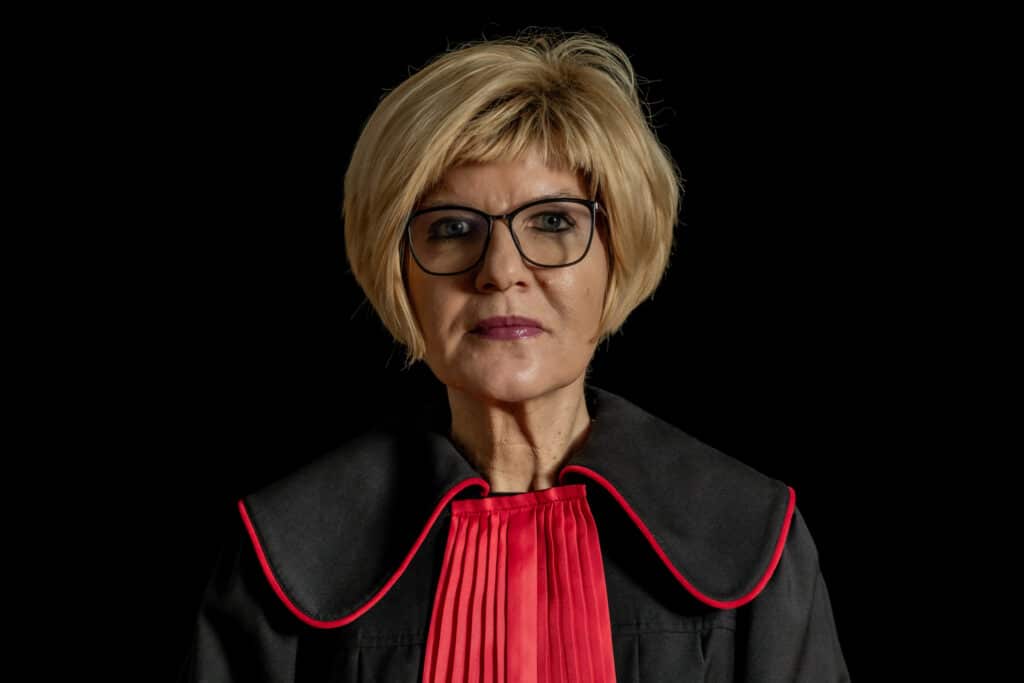
Katarzyna Kwiatkowska
Public prosecutor since 1991
District Attorney's Office
Warsaw-Prague
"First, these 113 public prosecutors were demoted. The heads of unit were replaced. The terms of office were abolished. Selection procedures were abolished. A cadre of prosecutors was created who serve the leadership of the public prosecutor's office faithfully and are very loyal to it. The nature of the management shows that the leadership wants to transform the public prosecutor's office from an autonomous organ of the state into a kind of uniformed special service. This is to be done according to the principle "there is an order, you have to obey it and not contradict it". And that has nothing to do with a public prosecutor's office, let alone a European public prosecutor's office."
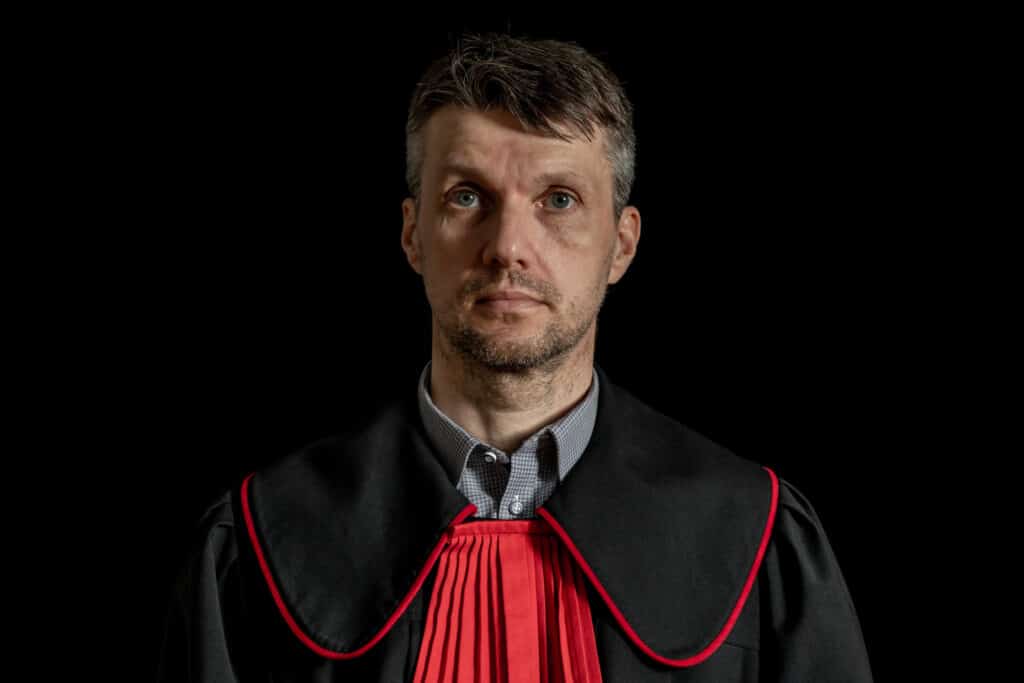
Jarosław Onyszczuk
Public prosecutor since 1998
District Attorney's Office
Warsaw-Mokotów
"I have no fear of retaliation from the public prosecutor's office, nor of an attempt to remove me from the profession. Mentally, I have already overcome this threshold of apprehension or fear. I am prepared for many things, such as the secondment. I can be transferred to any unit every year and I can certainly take it. It won't break me and it won't change my belief in the rule of law or my criticism of negative developments in the public prosecutor's office."
More: Reversal of roles
Katarzyna Szeska has the viewer firmly in her sights. But Piotr Wójcik's composition, as it can be seen in the physical exhibition, shows more. Three miniatures in the top right-hand corner of the picture show the prosecutor in profile. We are looking at her - in profile, she is unable to reciprocate. The framing color picks up on the red of the prosecutor's robe - and refers to her office. However, the interplay of miniatures and portrait is more reminiscent of identification images. Wójcik thus refers to the reversal of roles for public prosecutors as a result of the judicial reforms in Poland.
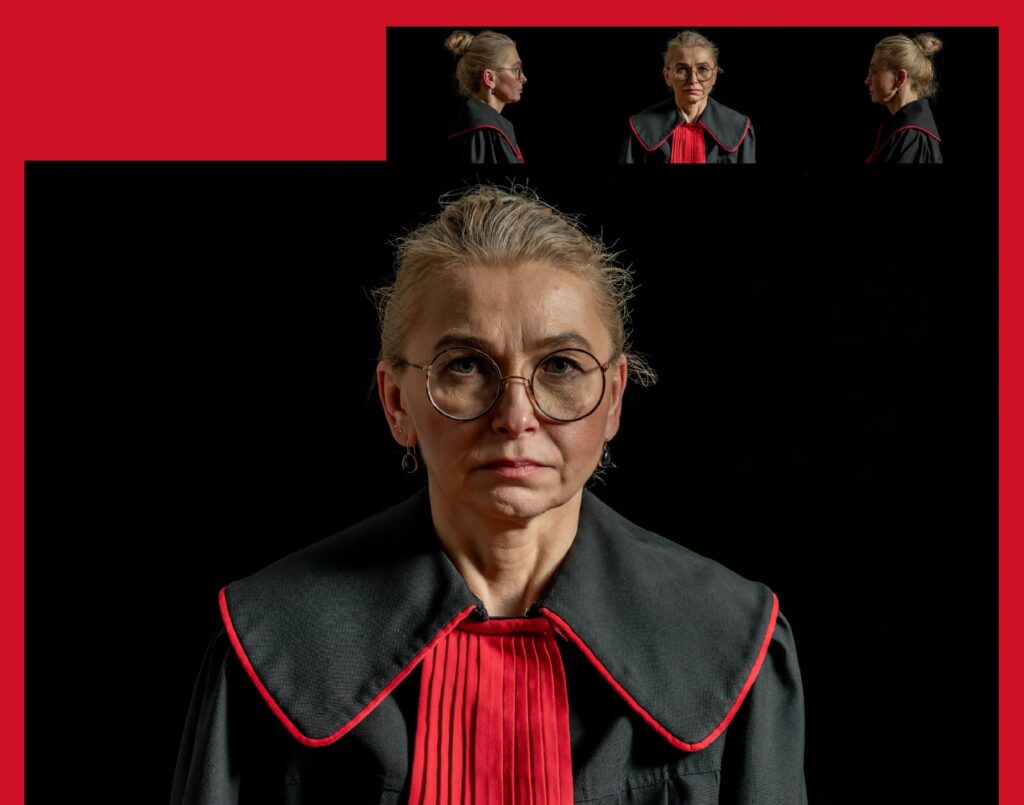
"In the 20 years that I have been observing the public prosecutor's office from the inside, it has always been a wonderful toy in the hands of politicians. Whoever came to power got this wonderful toy.
There must be a mental revolution in our political class. Without independent courts and an independent public prosecutor's office, we will never have a constitutional state. I am an idealist and I dream of the ideal of a public prosecutor's office without this political cap."
Guaranteeing freedoms, respecting rights
Dorota Zabłudowska
Judge since 2002
Gdansk Regional Court
"The state is there to serve the citizens, to protect them, to ensure their safety, to guarantee their freedoms and to respect their rights. And I dare say that of the criteria I have listed, I don't know if any of them are one hundred percent fulfilled at the moment."
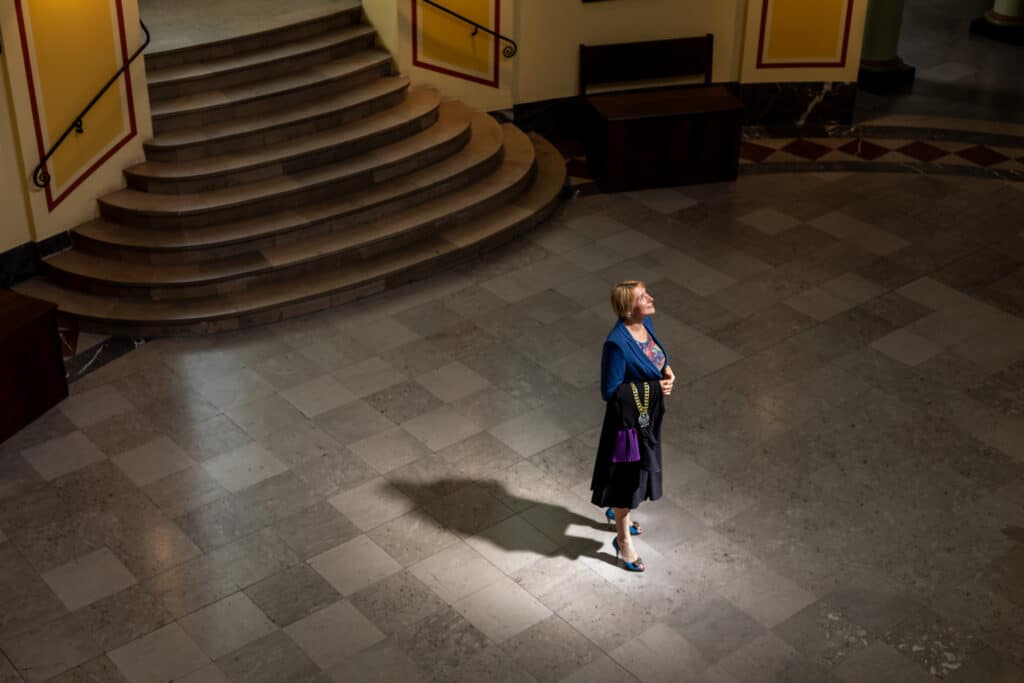
The case of Igor Tuleya
Igor Tuleya has been a judge since 1996. Among other things, his vehement criticism of the judicial reform made him famous in Poland, but also internationally. The so-called Disciplinary Chamber was founded in 2017. Tuleya was suspended by it for almost two years in 2020 and lost his judicial immunity. The disciplinary chamber has since been dissolved. Tuleya has been working as a judge again since 2022. The pictures and the quote were taken between 2020 and 2021.
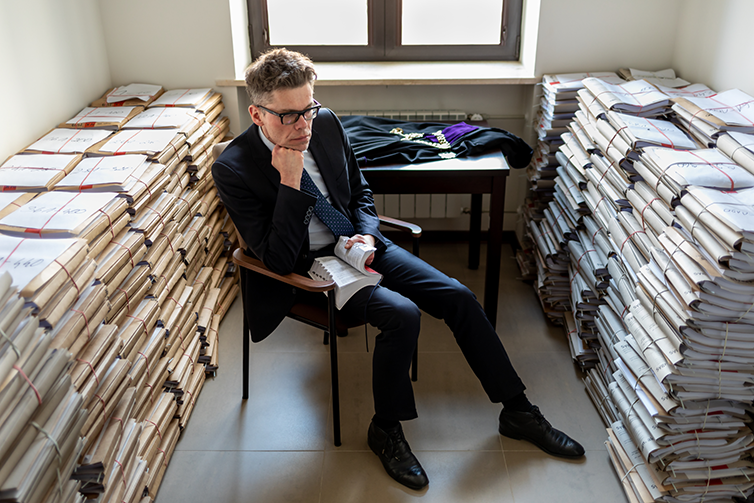
Judge since 1996
Regional Court Warsaw
"We may be powerless, but we are not defenceless. And today, and I will always say this: it is worth defending values. And it is worth paying any price to defend them. As long as we fight, we are winners. There is sunshine behind the clouds and even after the longest night, a new day will come. I am convinced of that."
More

On January 20, 2021, there was a demonstration and press conference against the case in front of the General Prosecutor's Office building in Warsaw. Pictured here are Igor Tuleya (center), Judge Krystian Markiewicz and lawyer Michał Wawrykiewicz.
"Lawyers of good will"
A "coalition of lawyers of good will" - this is how the Polish journalist Ewa Siedlecka described the group of judges, public prosecutors and lawyers who are persistently committed to the principles of the rule of law in 2021. They generated publicity for the rule of law under pressure and defended judges and civil society actors.
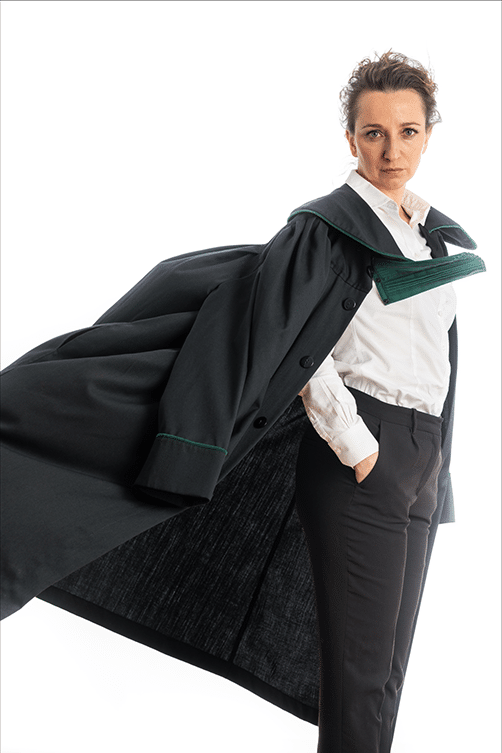
Sylwia Gregorczyk-Abram
Lawyer since 2010
"'Free Courts'" was a spontaneous action. Suddenly, in July 2017, I received a text message from Michal Wawrykiewicz with a script and a proposal to record videos about the rule of law: 'Tomorrow at 1 pm in Wiejska Street'. I pick up Marysia Ejchart-Dubois, with whom I had already worked in the Hołdy association, and Paulina Kieszkowska-Knapik. A week after the founding of 'Free Courts', we gave a speech in the evening on Krasiński Square, where thousands of people gathered as far as the eye could see."
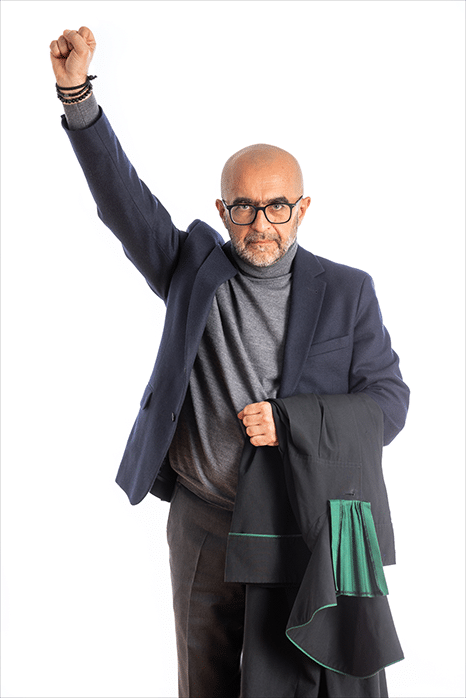
Radosław Baszuk
Lawyer since 1992
"I have probably taken on over a hundred defenses in misdemeanor proceedings in connection with participation in peaceful assemblies. I defend social activists in several criminal proceedings. I also represent disobedient judges in disciplinary and immunity proceedings. I am convinced that civil resistance is capable of, if not stopping, then at least slowing down the state's course towards authoritarianism. Resistance makes sense."
Judges under pressure
Not least due to the establishment of the disciplinary chamber, judges in Poland found themselves under increasing pressure. Photographer Piotr Wójcik describes how judges were defamed by the right-wing press, but also by the public media supported by the PiS party.
Journalist Ewa Siedlecka describes the background against which this was possible: "The way the judiciary works has been heavily criticized in Poland since the early 1990s, sometimes rightly, sometimes wrongly." Some judges have defied the pressure from the Disciplinary Chamber since 2017, for example: "They made independence synonymous with the dignity of the judiciary. Paradoxically, the anti-constitutional PiS party has made judges, who for years had refused to refer to the constitution in their rulings, realize that their power and strength also lies in the application of the constitution. [...] The price for this is disciplinary and criminal proceedings and the loss of the opportunity to practice their profession."
In their conversations with photojournalist Piotr Wójcik between 2020 and 2021, these judges gave an insight into their personal view of the developments. But also on the office of judge and the rule of law.
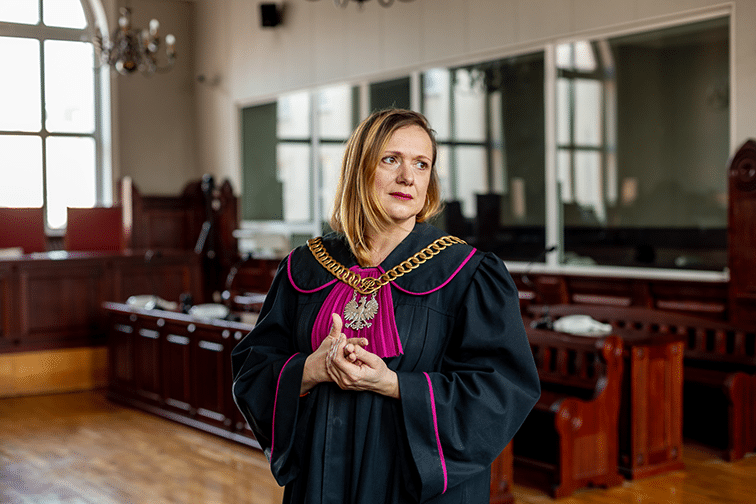
"The judges avoided showing themselves in everyday situations, such as gardening or pumping up a bicycle tire in front of a supermarket.
And this has worked to our disadvantage. Because since no-one has informed us of this human, normal side it's really easy to create the character of such a terrible judge."
Joanna Hetnarowicz-Sikora
Judge since 2006
Słupsk District Court
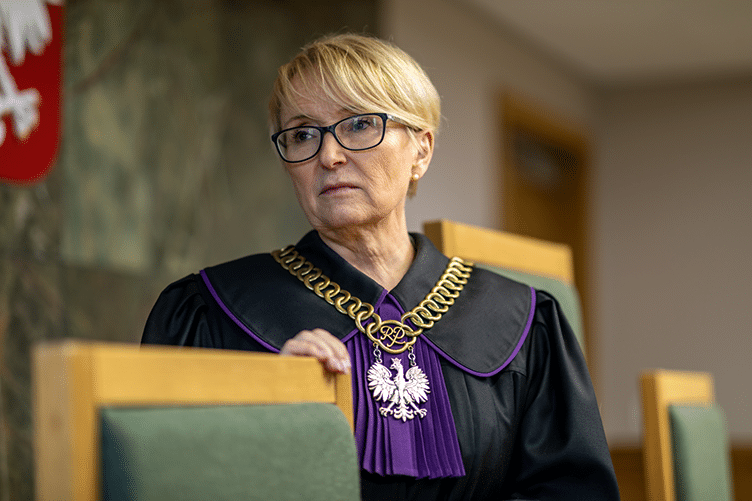
"We will no longer remain silent and stand idly by while the rule of law is destroyed. A situation completely unforeseen by those in power Side effect of their actions is this pre-existing resistance of the judiciary, a community that stands unanimously and together - shoulder to shoulder - for the Citizens' rights fights. Nobody expected it, because we weren't prepared for it for years."
Beata Morawiec
Judge since 1990
Krakow Regional Court
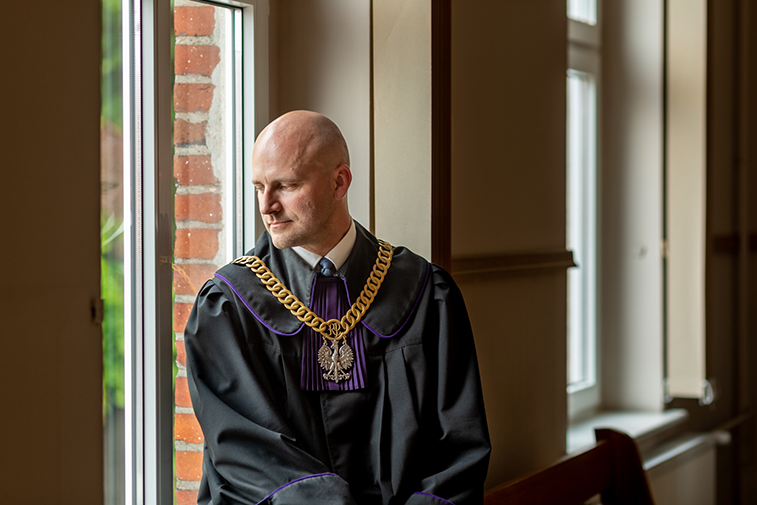
"If we have a government and a parliament from a single party, What are these political bodies lacking to fully Power? Only the courts. If a political group has a majority in parliament, its own government and a president of the same political persuasion, it can only fear losing a case in court. Because here they are dealing with an independent judge who is guided only by the law and decides the dispute impartially and not always in favor of political power."
Bartłomiej Starosta
Judge since 2008
Sulęcin District Court
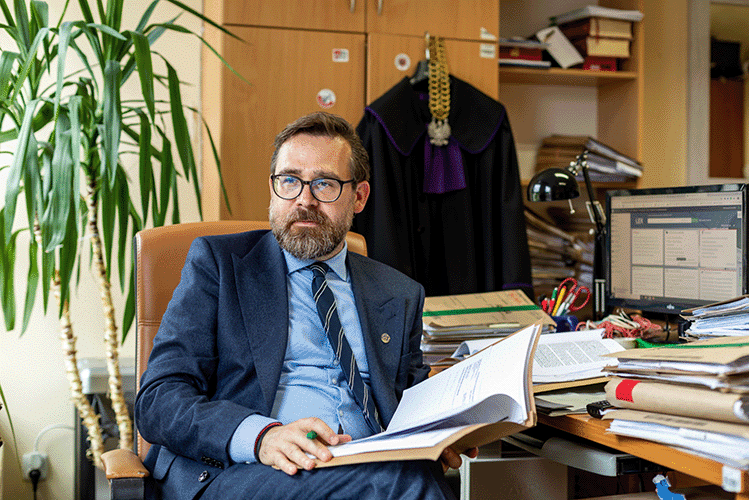
"For me, the constitution is a protective shield to defend the rights and freedoms of citizens. It should keep any government in check so that it does not become an oppressive power over the citizens and so that the rights of all - including those who are in the minority - are protected. It is a contract that we have made as a society and to which we all - especially the government - must adhere."
Bartłomiej Przymusiński
Judge since 2007
Poznan District Court - Stare Miasto
And now?
Piotr Wójcik portrayed the lawyers from 2020 to 2021. The disciplinary chamber has since been dissolved. The new elections in Poland in the fall of 2023 changed the majorities in parliament - and gave the PiS party a rejection after nine years in government. Has this reversed everything? What legacy have the protests and experiences given the Polish constitutional state? Listen to the perspectives of three of the lawyers portrayed here, who were interviewed again by Piotr Wójcik exclusively for the Forum Law 2024 Foundation.
State Attorney Katarzyna Kwiatkowska
You are currently seeing a placeholder content of YouTube. To access the actual content, click on the button below. Please note that data will be passed on to third-party providers.
More informationJudge Igor Tuleya
You are currently seeing a placeholder content of YouTube. To access the actual content, click on the button below. Please note that data will be passed on to third-party providers.
More informationLawyer Radosław Baszuk
You are currently seeing a placeholder content of YouTube. To access the actual content, click on the button below. Please note that data will be passed on to third-party providers.
More informationHow self-evident is judicial independence? What makes a good judge? And why was it worth standing up for them? The images and quotes presented by Piotr Wójcik encourage reflection and discussion. This is exactly what we invited people to do in our rooms in Karlsruhe and Leipzig from February 16 to April 7, 2024.
What happens when politics tries to undermine the rule of law? Piotr Wójcik's portrait photographs of Polish judges, public prosecutors and lawyers who opposed the erosion of the Polish rule of law impressively showed our interested audience: The preservation of the rule of law always requires the commitment of the individual!
Recording of the discussion evening "Poland after the parliamentary elections: How can a constitutional state be rebuilt?" from March 7, 2024
You are currently seeing a placeholder content of YouTube. To access the actual content, click on the button below. Please note that data will be passed on to third-party providers.
More information