Menu Close

Beyond the Museum

Architektur für ein neues Miteinander

Interdisciplinary Symposium of the Stiftung Forum Recht

July 13 and 14, 2022

Built spaces provide orientation. They enable and structure social interaction, influence how people feel, and express the socio-political zeitgeist. This symposium on the establishment of the Stiftung Forum Recht focused on the architecture of the future buildings in Leipzig and Karlsruhe and the question of how to shape the idea for a cultural institution of the future.

Panel Discussion and Digital Symposium via Livestream

The idea of an architecture for a new togetherness combines functional and content-related demands. It questions both established institutional spatial concepts and self-perceptions and advocates a radical combination of mediation and research, participation and curation with the aim of creating changeable spaces for interdisciplinary and participation-oriented program work in urban space.

What can changeable spaces for discourse and participation look like? What architectural language is needed to communicate law and the rule of law in an interdisciplinary and barrier-free way? How can future visitors and users be involved in the architectural design process and a vibrant urban space be developed sustainably? The symposium will explore these and other questions in three main topics under the premise of architecture for a new togetherness, building on the results of the second Impulse Symposium in the run-up to the establishment of the foundation.

"We need public, open spaces in which people, perspectives and perceptions can meet, exchange and argue openly and freely."
Dr. Ulrike Lorenz, Klassik Stiftung Weimar
"I see the Forum Recht as a public space for discourse for a participatory debate on legal issues. It is not a museum and needs to be functionally and architecturally reinvented."
Univ. Doz. Dr. Dieter Bogner
"Architecture is part of the social sphere, but not a simple mirror of the circumstances. Rarely is it built as planned, and a building quickly takes on a life of its own."
Prof. Dr. Thomas Schmidt-Lux, University of Leipzig
"In the age of digital-analog life realities, we need a new approach for the development of participative and interactive cultural venues."
Christoph Deeg
"Participatory planning culture is the key to user-centered and future-oriented architectural production!"
MA Dipl.-Ing. Fee Kyriakopoulos, University of Coburg
"The Forum is synonymous with the public. Traditionally, however, it is associated with a great deal of tension - also in terms of architecture and urban space."
Prof.'in Dr. Brigitte Sölch, University of Heidelberg
"Citizen participation must become citizen empowerment - to paraphrase Buckminster Fuller: there are no passengers in the city of tomorrow, we are all crew."
Dipl.-Ing. Steffen Braun, IAO

Panel Discussion: „Exhibiting and Communicating the Intangible: What Does This Mean for Architecture?“

How can the immaterial be experienced architecturally? And what spaces are needed to convey justice and the rule of law, democracy and human rights? The public kick-off discussion on 13 July 2022 asked about new types of buildings for more togetherness and participation, about methods that involve the urban space and its users in the development process and about spatial concepts that promote interdisciplinary program work.

The panelists were Dr. Dieter Bogner (university lecturer, museum planner and exhibition curator), Prof. Holger Kleine (RheinMain University of Applied Sciences), Dr. Ulrike Lorenz (Klassik Stiftung Weimar) and Prof. Dr. Karen van den Berg (Zeppelin University Friedrichshafen).

Moderator: Katharina Stahlhoven (Federal Foundation for Building Culture)

Opening Remarks and Introduction: Henrike Claussen (Forum Recht Foundation)

Hybrid Symposium „Beyond the Museum: Architecture for a New Way of Living Together“

Form Follows Function Revisited

Changeable spaces for cultural and political education

Various approaches to contemporary museum, educational and performance architecture test the limits of traditional spatial concepts and the institutional self-images associated with them. What characteristics characterize them as places? What spaces are needed to convey democratic practice? And how could the forum concept associated with the foundation be translated into (transformable) (interior) architecture?

Architecture and Urbanity

Democratic manifestations in the city of today

With the new buildings of the Forum Recht Foundation, interactive cultural buildings are being created to communicate law and the rule of law. What does this mean for the development of a "democratic" design language? What can new buildings in existing and new urban districts achieve in terms of innovative urban architectural concepts? What potential can architecture unfold as a seismograph and source of inspiration for socio-political negotiation processes?

Space for Participation

Participation and inclusion in construction projects

The Forum Recht Foundation has the task of reaching all social groups with its services in a forum designed for citizen participation. What does this mean for the process of spatial conception and design planning of its new buildings? What effect do innovative methods and approaches to participation have in construction projects? And what role can participation also play in the conceptual and structural development of sustainable hybrid spaces?

Programme

July 14, 2022

10:00 a.m.

Welcome and introduction to the symposium

Dr. Stephan N. Barthelmess, Forum Law Foundation

10:15 a.m.

Impulses

Museum buildings between
Representation and appropriation

Prof.'in Dr. Karen van den Berg, Zeppelin University Friedrichshafen

Karen van den Berg has held the Chair of Art Theory & Staging Practice at Zeppelin University since 2003 and has been academic director of the artsprogram there since 2006. She studied art history, classical archaeology and Nordic philology in Saarbrücken and Basel, where she received her doctorate in 1995. She has taught and held visiting positions at the University of Witten/Herdecke, the Chinati Foundation in Texas, Stanford University and the IKKM at the Bauhaus University Weimar. Van den Berg's research focuses on art and politics; socially engaged art; theory and history of exhibiting; educational architecture and studio research.

Picture: Lorenz Widmaier

Architectures of the performing arts:
Activated and activating rooms

Prof.'in Dr. Annette Menting,
HTWK Leipzig

Annette Menting is an architectural historian and critic. After studying architecture at the Berlin University of the Arts, she worked in the architectural office of Hinrich Baller and von Gerkan, Marg and Partners. 1997 Doctorate with Jonas Geist at the UdK Berlin on the work of Paul G. R. Baumgarten. DFG habilitation scholarship for research on the complete works of Max Taut. Since 2000, she has been Professor of Architectural History and Criticism at the Leipzig University of Applied Sciences. Memberships: Saxon Academy of Arts, Association of German Architects, Working Group for Theory and Teaching of Monument Conservation, German National Committee of ICOMOS and jury member for architectural competitions. Research and publication on the architectural history of modernism, monument preservation and contemporary building culture. Since 2016, together with Barbara Büscher, she has headed the DFG research project "Architecture and Space for the Performing Arts", which has been in its second funding phase since summer 2021 until 2024.
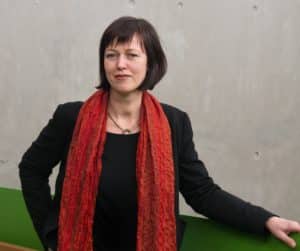
Picture: Photography Margret Hoppe

Salons of the Republic: spaces for
Democratic negotiation practice

Prof. Holger Kleine,
RheinMain University of Applied Sciences

Accordion Content

Holger Kleine is an architect in Berlin and professor in Wiesbaden. Research area: public interiors. Architect of the German Embassy in Warsaw. Author of the books New mosques and Room dramaturgy. Curator of My Home is my Parcel (DAM 2020) and The salons of the Republic (DAM / JOVIS 2021). His project Talking Station 1 was exhibited at the 2021 Architecture Biennale in Venice and in New York. Currently working on a project about Marcel Proust.   

www.design-follows-drama.com

Picture: Holger Kleine

Transfer

lab.bode and Haus Bastian:
Flexible space concepts for cultural
and political education in practice

Heike Kropff,
Berlin State Museums

Heike Kropff has been Head of the Education / Communication Department at the Staatliche Museen zu Berlin, Stiftung Preußischer Kulturbesitz since August 2013. From 2008 to 2013, she was responsible for education and communication at the Museum Folkwang, Essen. From 2005 to 2008, she was in charge of art education at the Westphalian State Museum of Art and Cultural History, Münster, as well as the education work for the major exhibition sculpture projects münster 07. Previously, she worked at various institutions, e.g. the Art and Exhibition Hall of the Federal Republic of Germany in Bonn, the Museum Service Cologne, the Kunstsammlung Nordrhein Westfalen in Düsseldorf and the Museum Ludwig in Cologne. Since 2008 she has held teaching positions at various universities, e.g. the Technical University of Berlin, the Free University of Berlin, the Ruhr University Bochum, the University of Hamburg and the Karlshochschule International University, Karlsruhe. From 1997 to 2004 she ran an independent exhibition space in Cologne.

Picture: Heike Kropff

Forum Groningen: Creating a Third
Space with innovative programming
and Contemporary Architecture
[Lecture in English]

Hans Poll,
Forum Groningen

Speaker: Hans Poll, Forum Groningen

Director Programming & Marketing of Forum Groningen
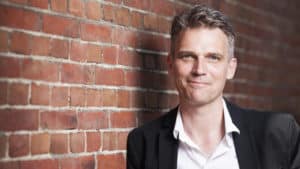
Picture: Hans Poll

1:15 pm

Impulses

Architecture, social issues and democracy.
Sociological perspectives

Prof. Dr. Thomas Schmidt-Lux, University of Leipzig

Thomas Schmidt-Lux is Professor of Cultural Sociology at the Institute of Cultural Studies at Leipzig University. He is interested in architecture, cities, law and violence as well as qualitative methods. He is currently researching the architecture of the digital and lost cities in Oman.
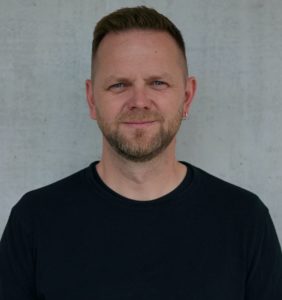
Picture: Simon Reinhardt

What makes spaces democratic?

Prof. Dr. Jan-Werner Müller, Princeton University

Jan-Werner Mueller is Professor of Political Theory at Princeton and Fellow at the New Institute, Hamburg. He studied at the Free University of Berlin, University College London, St. Antony's College Oxford and Princeton University. From 1996 to 2003 he was a Fellow at All Souls College, Oxford; from 2003 to 2005 he was a Fellow in Modern European Thought at the European Studies Center, St. Antony's College.
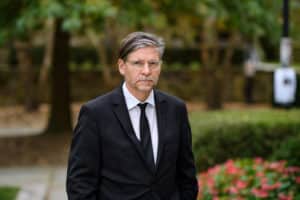
Image: Princeton University

The forum as an idea, vision and
Conflict. Art and architectural history
Perspectives.

Prof.'in Dr. Brigitte Sölch,
Heidelberg University

Brigitte SölchProfessor of Architectural and Modern Art History at the University of Heidelberg, previously taught at the Stuttgart Art Academy. She was a long-time employee and co-project manager at the Max Planck Institute for Art History in Florence and completed her habilitation at the Humboldt University in Berlin. Sölch is co-founder of the DFG network Paths - Methods - Critiques: Women Art Historians 1880-1970 and co-editor of the Zeitschrift für Kunstgeschichte.

Picture: Brigitte Sölch

Transfer

Public spaces as social consolidation apparatuses and lubricants of society

Prof.'in Dipl.-Ing. Isabel Maria Finkenberger,
FH Aachen

Accordion Content

Isabel Maria Finkenberger is a freelance urban planner AKBW, owner of STUDIO if+. Büro für Stadtplanung und räumliche Transformation in Cologne and Professor of Fundamentals of Urban Planning, Urban Transformation and Innovative Process Design at the FH Aachen. With her interdisciplinary network, she works in practice, research and teaching on issues of public welfare-oriented urban development and spatial transformation and on the interface between urban planning, artistic practices and cultural institutions.

Picture: Isabel Maria Finkenberger


3:30 pm

Impulses

Democratic planning and Building culture

MA Dipl. Ing. Fee Kyriakopoulos,
The Baupiloten BDA

Accordion Content

Fairy Kyriakopoulos is a graduate engineer in architecture at die Baupiloten (BDA) with a focus on participatory spatial practice in the context of educational buildings and communal forms of housing. From winter semester 2022 she will be teaching at the University of Coburg on the subject of "Participatory Spatial Practice".

Picture: Fee Kyriakopoulos

Citizen Science & Digital.Labs -
Co-creative participation processes
for the cities of tomorrow

Dipl. Ing. Steffen Braun,
Fraunhofer IAO Stuttgart

Accordion Content

Dipl.-Ing. Steffen Braun is a member of the board of directors and head of the "Urban System Design" research department at the Fraunhofer Institute for Industrial Engineering IAO in Stuttgart. He is a member of several expert committees, advisory boards and working groups on smart cities, art in public spaces, urban lightweight construction and the Morgenstadt initiative. Steffen Braun studied architecture and urban planning at the University of Stuttgart from 2003-2009.
Picture: Steffen Braun

Participation at the threshold
of analog and digital
Rooms of the future

Christoph Deeg,

Consultant in the areas of digital transformation and playful participation

Accordion Content

Christoph Deeg describes himself as a "designer of the digital-analog living space". He advises national and international organizations, institutions and companies in the areas of digital transformation, transformative gamification and playful participation. Another area of his work is the development of new cultural, educational and work spaces as digital-analog experience spaces with a focus on interaction and participation.
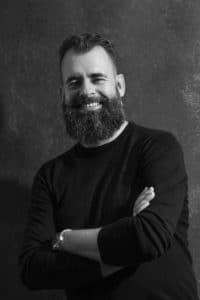
Picture: Christoph Deeg

The program of the symposium can be found here as a PDF file Download.

Skip to content