
Digital, Immediately and Swift: How to Make the Legal System Accessible
Panel Discussion with the German Bar Association in Berlin
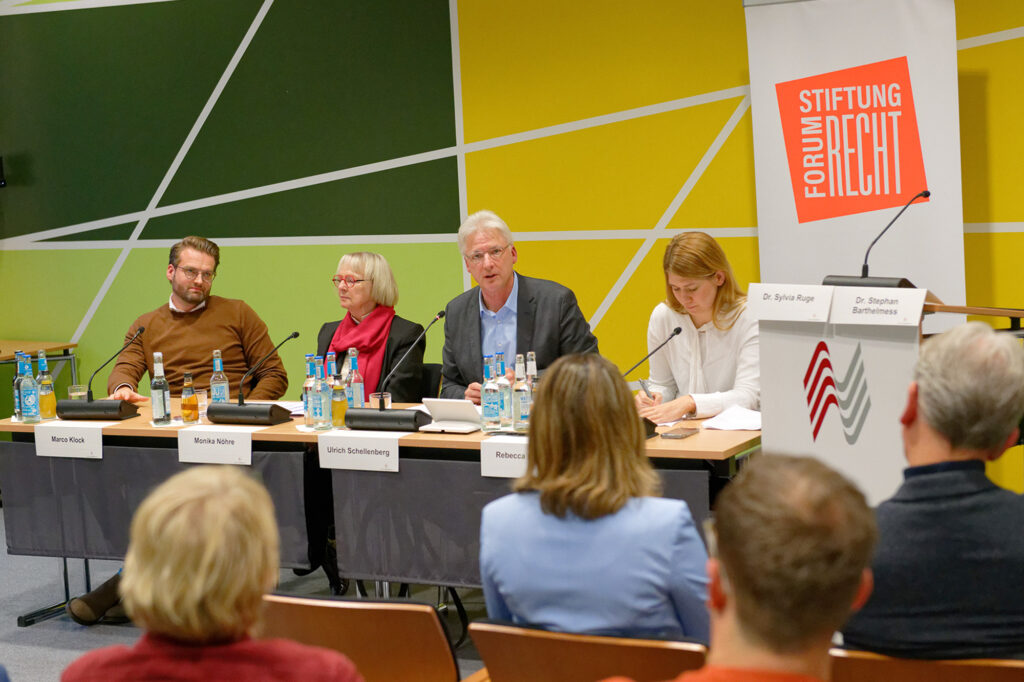
In her welcoming address, Dr Sylvia Runge, Managing Director of the DAV, emphasised: "We need to address the role of lawyers, who can set the necessary course as a link between those seeking justice and the judiciary." Anyone who has experienced injustice can seek legal advice and representation. However, this often fails due to a lack of knowledge about their own rights. One reason for this could be the increased complexity of legal texts, another could be the structural hurdles in claiming them. The discussion showed that it is not only financial aspects that lead people to decide not to take legal action. According to Monika Nöhre, from the perspective of the legal profession, the unpredictability of judges' decisions also poses a challenge to the question of whether or not a case has a good chance of being heard in court.
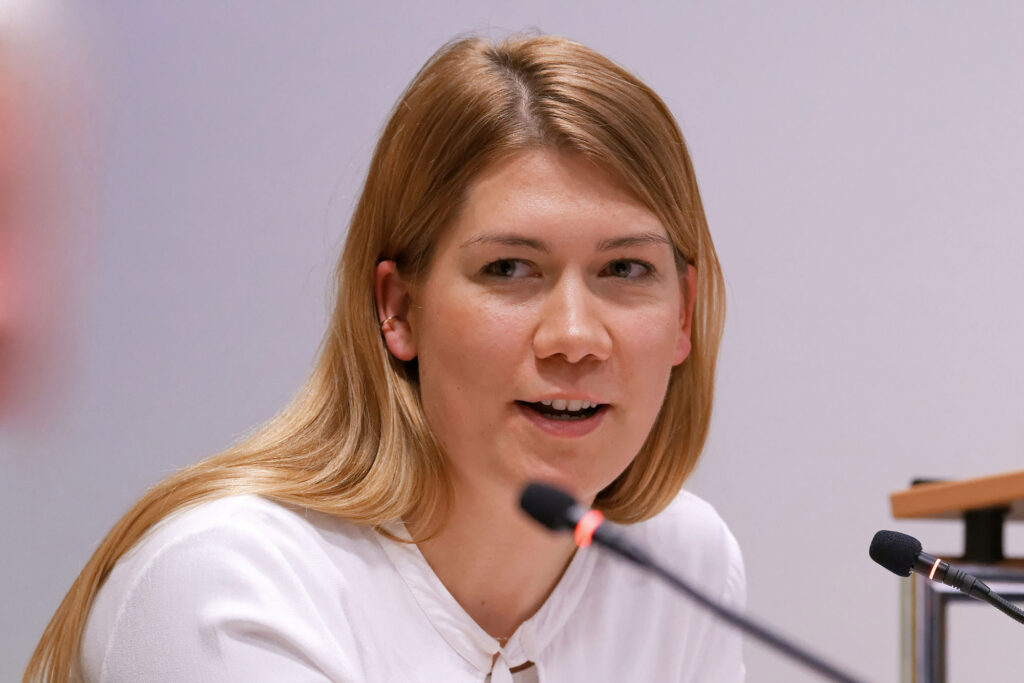
Rebecca Richter spoke about her self-perception as a young law firm that has set out to make the law more accessible and to take clients' expectations seriously. Rebecca Richterrepresents clients in and out of court. She is also a member of association Deutscher Juristinnenbund. From her point of view, in addition to meeting on an equal footing and a transparent presentation of the legal process, there also needs to be a binding committment towards more pro bono cases by lawyers.
Dr Stephan Nikolaus Barthelmess, Deputy Director of the Stiftung Forum Recht, also emphasised in his welcoming address: "We need to focus on the role that structural inequalities and social factors play in the decision to claim one's rights." One of the topics discussed was whether digital applications, i.e. legal tech solutions, could help to overcome barriers in the future. This was a topic addressed by Marco Klock. Above all, he sees a discrepancy between the digitalisation of processes in German courts and the needs of the population, who are increasingly turning to private service providers as a result.
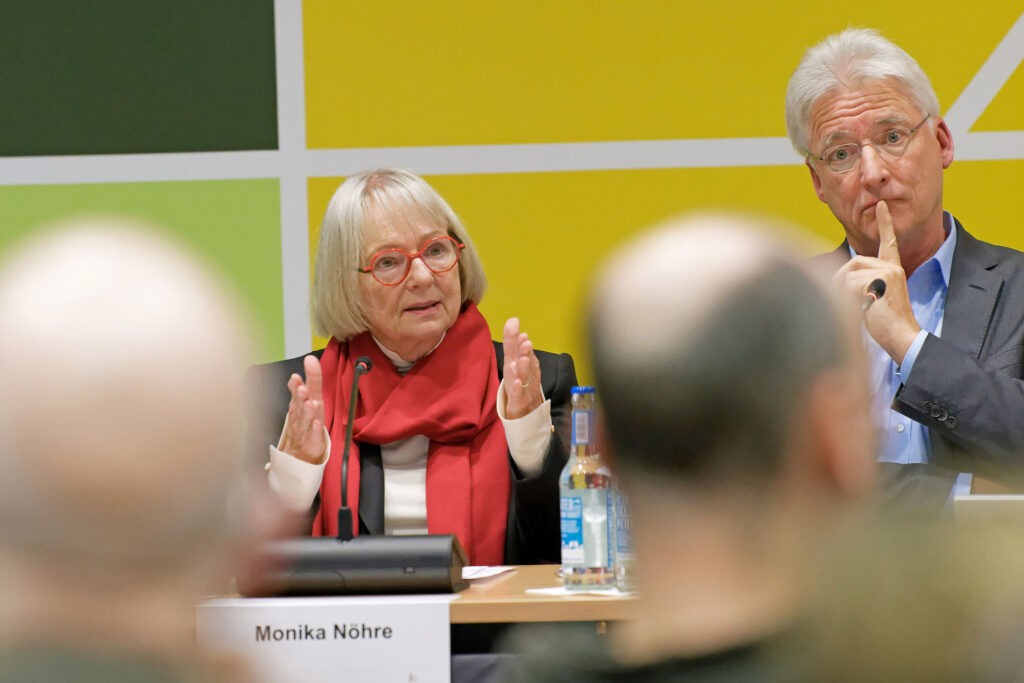
The report "Erforschung der Ursachen des Rückgangs der Eingangszahlen bei den Zivilgerichten", which Monika Nöhre contributed to for the Federal Ministry of Justice in her former function as President of the Kammergericht in Berlin, came to a similar conclusion. The report examined the decline in the number of lawsuits filed by the population. According to the study, fewer and fewer cases have been brought to German civil courts over the past 20 years. Among other things, the research consortium came to the conclusion that "individual factors relating to the organisation of the judiciary would reduce the attractiveness of civil proceedings" [1].
Could a change of perspective in the judiciary make a difference here? The lively audience discussion provided various ideas and suggestions for solutions: for example, a rethink of how lawyers and judges see themselves as gatekeepers of the law could lead to more services and guidance for citizens and pragmatic solutions for everyday life. Openness towards multimedia innovations such as the digital conduct of negotiations or simple online counselling platforms were cited as examples.
Further considerations followed this direction: shouldn't claiming one's own rights actually be understood as part of basic civic care - and its financing facilitated through appropriate support programmes?
An important factor, which was repeatedly highlighted in the discussion, is the lack of understanding of our legal system. "Law as such must become visible!" emphasised Monika Nöhre in her closing remarks. "I would be delighted if there were more access to justice in our country (...). Law must have a face!" This is precisely where the mandate of the Stiftung Forum Recht comes in. Our task is to close (knowledge) gaps with our programme offers and to make it easier for people to access our legal system and the legal basis for our coexistence.
#LetsTalkAboutRecht
Recording
You've missed the event? Watch the recording, kindly provided to us by Deutscher Anwaltverein. Please note that the video is available in German only.
You are currently seeing a placeholder content of YouTube. To access the actual content, click on the button below. Please note that data will be passed on to third-party providers.
More informationDive deeper
Research Paper
The final report of the research project "Erforschung der Ursachen des Rückgangs der Eingangszahlen bei den Zivilgerichten" is available for free download (in German only) at bmj.de.
About Deutscher Anwaltverein
The DAV is the voluntary association of German lawyers and brings together around 60,000 lawyers and notaries who are organised in 253 local lawyers' associations in Germany and abroad. It represents the interests of the German legal profession at national, European and international level. You can find out more at anwaltverein.de